by Finn Iossa
History’s bloodiest mutiny is arguably the 1628 shipwreck of Batavia, a Dutch merchant ship headed for modern day Jakarta, Indonesia alongside a fleet of seven ships. She was owned by the Dutch East India Company, or VOC. Batavia, like other VOC vessels, had two commanders; an upper merchant, Francisco Pelsaert, and a skipper, Ariaen Jacobsz. The issue with these particular commanders was that they had previous issues from an earlier voyage, during which Jacobsz had gotten drunk and received a public scolding from Pelasaert. Accompanying the two men was under-merchant Jeronimus Cornelisz, a follower of the controversial and heretical painter Torrentius. To avoid persecution for his beliefs, Cornelisz joined Batavia.
Pelsaert was sick while Batavia crossed the Indian Ocean, so he remained in his cabin most of the time. Meanwhile, Jacobsz and Cornelisz befriended one another and came up with a sinful plan: kill Pelsaert and throw the passengers overboard, recruit as many sailors as possible and kill all others, steal the ship’s treasures, and become pirates sailing Spain. It was simple, it was effective. Cornelisz set about recruiting sailors. The first thing they did to bring their plan to action was attack Lucretia Jans, a 27 year old woman on her way to meet her husband in Batavia. The idea was that the men would be punished harshly for assaulting her; so harshly that Batavia’s crew would turn against Pelsaert. This was not the case, however. Beneath the deck it was too dark for Jans to identify any of her attackers but one, Jan Evertsz, whose voice she recognized. Unfortunately enough, the incident was quickly forgotten about.
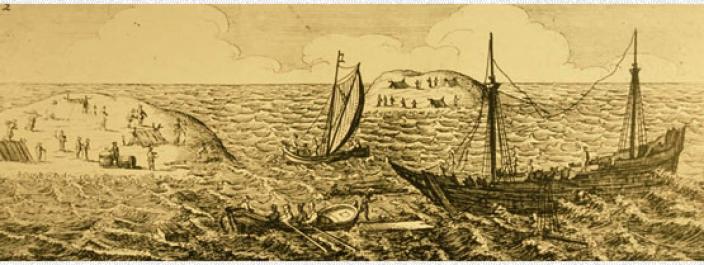
The next thing to do was to separate Batavia from the rest of the fleet. Her stern light was turned off and intentionally guided off course by Jacobsz, likely to give them more time for this mutiny, and Batavia was lost by the other ships. However, navigation in 1628 was difficult- and Pelsaert was woken in his bunk when Batavia crashed into a strip of coral reef. Yet to realize the severity of the situation, the crew began to push the cannons of the gunports in hopes they could float the ship off the rocks. It didn’t work. The mainmast, which connects to the keel, was further breaking Batavia each time she hit the reef. Therefore, Pelsaert decided it would be best to cut it down. This only worsened the situation, and finally, groups of survivors were taken to the nearby shore; a small, barren island off of Australia now called Beacon Island. It had no trees nor animals, and was quickly named Batavia’s Graveyard by the survivors. Of the around 340 people aboard Batavia, about 100 died in the shipwreck, and it would only get worse.
When Pelsaert discovered that the island was uninhabitable and they would not be able to retrieve much from the ship, he made the decision to take the longboat and sail to mainland Australia with a few other men, including Jacobsz. Pelsaert retrieved a barrel of water and was going to give it to the survivors onshore, but was held back by the boatswain and they sailed away. Quickly, the strip of rock Batavia had crashed upon and Pelsaert had departed from was named Traitor’s Island. Pelsaert and his men sailed to Australia, but upon discovering the mainland was just as barren as the island, they made the decision to sail to Batavia for a rescue ship.
Ten days after the shipwreck, under-merchant Cornelisz washed ashore clinging to the bowsprit. Cornelisz quickly assumed authority, being third in command. His mutineers decided that due to the little food they had, they should kill off the survivors until only 40 remained. Cornelisz did not want this, and decided to send survivors off to the high island to search for water, where they would likely perish. When they didn’t die quick enough for the mutineers’ liking, Cornelisz’s men were sent to the island to kill all the people there, save for 7 low rank sailors and a few women who were kept as sex slaves. This went on for months. Others were beheaded or rowed out to sea and pushed overboard. Cornelisz allowed his men to kill and rape as they pleased. For himself he kept Lucretia Jans, the same woman they had attacked aboard. He, however, did not directly kill anyone- though one time he tried to poison a baby and failed.
When Pelsaert and his crew returned with a rescue ship, only 70 survivors remained of the near 240. The mutineers were captured on the ship Sardam and tortured for information, which they all gave except Cornelisz. He denied his involvement even when tortured, and told Pelsaert that he was made to do it, else he would’ve been killed. On October 2, 1628, Cornelisz’s hands were both amputated and he was hanged. He died slowly and stubbornly, and did not give a confession even in his last moments. Most of the other mutineers lost one hand and were hanged as well, aside from Wouter Loos, soldier, and Jan Pelgrom, cabin boy. The two were pardoned from execution and instead left marooned on mainland Australia. The remaining survivors were rescued, though Pelsaert’s reputation was left damaged. Pelsaert embarked on one more voyage and died of disease on September 13, 1630.




 The Drumbeat
Leave a comment