by Marvice Linares
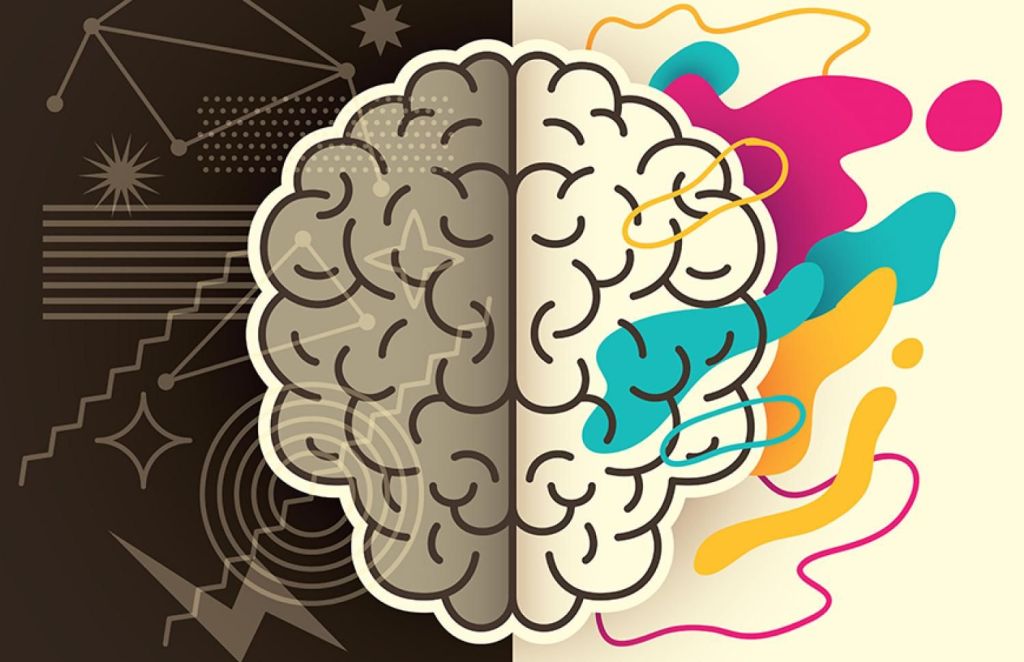
AP Psychology is a great full-year elective class to take at PHS, taught by Mrs. Welles and Ms. Boretz. In AP Psych, you discover what is the scientific study of behavior and several mental processes. Topics such as human emotions, personality, psychological disorders as well as treatment methods, are covered in this class. Various psychological theories and perspectives like behaviorism, cognitive psychology, and humanistic psychology are talked about. It is a great elective class to take to gain more knowledge.
So far, we have learned five units in AP Psych. At the beginning of the school year, our first unit was Biological Basis of Behavior. We learned about the parts of the brain, the four stages of sleep, psychoactive drugs, the eight major neurotransmitters, and nature vs. nurture. I believe the most interesting topic we discussed in this unit was the topic of nature vs. nurture, which is the debate about whether our traits and behaviors are determined by our genetics (nature) or by our environment and experiences through life (nurture). Traits such as eye color, height, and hair type are more influenced by nature. Whereas traits like social behavior, emotional responses also the way one talks are often characteristics of nurture. What made this section interesting was observing a real-life example of how different yet similar people can grow up depending on their environment. Mrs.Welles shared the interesting documentary, “Three Identical Strangers” discussing the story of identical triplets who were purposely split at birth to be adopted by three entirely different families as a psychological study.
Our second unit was Cognition. This is when we focus mainly on levels of memorization, the eyes, and the ears. We participated in fun, small games where we were able to see how great our memorization skills are and methods to improve our memory. We spent time learning about the different parts of the ears and eyes, and their functions. We even created a visual representation of an eye, using a mini golf ball, drawing and labeling the parts.
Our third unit was Learning and Development. In this unit, we learned more about ourselves. We took a short quiz to learn our parenting styles. In my opinion, it was interesting to see how many of us had similar parenting styles as our parents. My favorite activity in this unit was our Eggsperiment project. For this fun assignment, each student was responsible for one egg. Students were to document and bring this egg everywhere they went, in the car, walking in the hallway, grocery shopping, etc for about a week. Because this is still a graded assignment, if a student were to, in any way, break their egg, their grade would drop. Our teachers at PHS are easy-going and understanding, so your grade would not drastically drop, but there were extra credit opportunities that were simple to regain points.
The fourth unit was Social. We discussed the big five personality traits, defense mechanisms, and social norms. Nowadays, it is very easy to follow trends and do what we see others participate in. This was quite similar to the film, Jonestown, we watched in AP Psych. In 1978, a cult, led by Jim Jones, had a mass suicide of 900 members, drinking poisoned Kool-Aid. The cult members were manipulated into believing that this was an act necessary to achieve a greater purpose and avoid persecution. Like social norms, they willingly want to drink the poisoned Kool-Aid because they look around and notice everyone else is, even though they are dropping dead which somewhat seemed fine and normal to them. Typically, we tend to follow trends and whatever is popular.
Our fifth unit is called Mental and Physical. We deep-dive into discussing different types of mental disorders, stress, and treatments. It is always beneficial to educate yourself on any type of illness and solutions to be more informed and aware.
Psychology applies to our everyday lives. It helps us have a deeper understanding of our own complex emotions, strengthen our relationships, and make wiser decisions. For example, understanding concepts like nonverbal cues and attentive listening can improve how we interact with others. This helps conflict resolution by teaching us how to empathize and understand different perspectives. AP Psych is not just a fun AP class, but also benefits your day-to-day life.


 The Drumbeat
Leave a comment